

World of Warcraft (WoW) has one of the most dynamic and engaging combat systems in the MMORPG genre. It combines real-time action, strategic decision-making, and intricate mechanics to create an experience that is both accessible to beginners and challenging for veterans. In this article, we will take a deep dive into WoW’s combat system, breaking down its core elements, key mechanics, and how they all come together to create a satisfying and immersive gameplay experience.
Basic Combat Mechanics

At its core, WoW’s combat system revolves around real-time action, where players control their characters to attack enemies, use spells, and react to dynamic situations. Whether you’re slaying a mob of enemies or facing off against a powerful raid boss, the core mechanics of WoW’s combat remain consistent across all aspects of the game.
Key Elements of Basic Combat:
- Auto-Attack: Every character has an auto-attack mechanic, where basic attacks are executed automatically when an enemy is within range. These attacks typically deal moderate damage and serve as the foundation for more complex combat rotations.
- Abilities and Spells: Each class in WoW has a unique set of abilities and spells that provide additional damage, healing, or utility. These abilities typically have cooldowns, meaning they cannot be used continuously and must be timed effectively during combat.
- Targeting and Positioning: Properly targeting enemies and positioning your character in the right spot is crucial for both damage dealing and avoiding enemy attacks. Melee classes often need to position themselves close to the target, while ranged characters need to maintain their distance.
These basic mechanics form the foundation of all combat interactions in WoW, but to master the system, players need to understand the more intricate mechanics that build on these foundations.
Role-Specific Combat Dynamics
WoW’s combat system is designed around roles—each character class is specialized in one of several roles: damage dealing (DPS), healing, or tanking. Understanding your role and how it interacts with others is key to success, especially in group content like dungeons and raids.

Combat Roles and Their Functions:
- Damage Dealers (DPS): DPS classes are responsible for dealing as much damage as possible to enemies. These classes have a variety of abilities that can be used to maximize their damage output, including single-target and AoE (area-of-effect) abilities. DPS players must manage their resources, cooldowns, and positioning to maximize efficiency.
- Healers: Healers support the group by restoring health to allies. They have access to a range of healing spells and abilities that target either individual players or multiple allies. Healers need to keep an eye on health bars, positioning, and enemy mechanics while balancing resource management for efficient healing output.
- Tanks: Tanks are the defensive backbone of any group, taking on the majority of enemy damage to protect the rest of the team. Tanks use abilities to control enemy threat (aggro) and prevent damage from affecting DPS and healers. They must monitor their health, positioning, and threat levels to keep enemies focused on them.
Understanding how your role fits into a group setting is crucial for both PvE (player vs environment) and PvP (player vs player) content. Cooperation between roles is necessary to overcome challenges and defeat powerful foes.
Advanced Combat Features
While the basic mechanics of combat in WoW are fairly straightforward, the game also includes advanced features and systems that add depth and complexity. These mechanics are essential for maximizing performance, especially in high-level content like Mythic+ dungeons and raids.
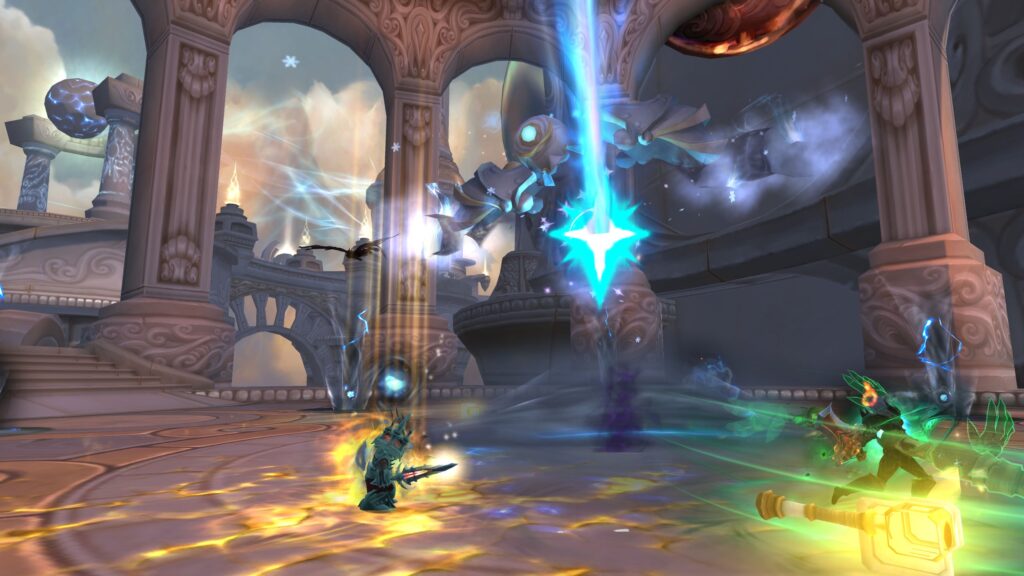
Key Advanced Combat Features:
- Cooldown Management: Many abilities have cooldowns, which require players to time their usage strategically. Advanced players need to understand when to use abilities for maximum effectiveness, as well as how to manage resources like mana, energy, or rage to avoid running out of power during key moments.
- Resource Management: Different classes rely on various resources to fuel their abilities, such as rage, energy, or mana. Efficiently managing these resources is key to sustaining damage or healing output throughout combat.
- Debuffs and Buffs: Buffs are positive effects that enhance your character’s abilities, while debuffs are negative effects that weaken enemies. Knowing how to apply, cleanse, and manage these effects in real-time is essential for progressing through difficult content.
- Movement and Avoidance: Movement is crucial in combat, especially during boss fights. Many bosses have abilities that require players to move quickly or avoid damage zones. Positioning and awareness are critical to surviving these encounters.
Mastering these advanced mechanics requires practice and a deep understanding of your character’s abilities. As you progress in the game and face tougher enemies, these systems will become increasingly important to your success.
Combat in PvP vs PvE
WoW’s combat system differs significantly between PvP (player vs player) and PvE (player vs environment) content. While the basic mechanics remain the same, the strategies and priorities change depending on whether you are fighting other players or AI-controlled enemies.
Combat in PvE: In PvE content like dungeons and raids, players work together to overcome scripted challenges that require coordination, precise execution, and the use of class-specific abilities. PvE combat tends to be more predictable, as enemies follow a set pattern of behavior, but it requires a high level of coordination and understanding of encounter mechanics.
Combat in PvP: In PvP, players face off against each other, which introduces a level of unpredictability and strategy not found in PvE. In PvP combat, players must anticipate the actions of their opponents, react quickly to changing situations, and use abilities to counter the moves of enemy players. PvP combat tends to be faster-paced and requires high levels of skill and awareness.

Understanding the differences between PvE and PvP combat is important for players who wish to engage in both. Mastering the mechanics of both can offer a more well-rounded and dynamic gameplay experience.
Conclusion
World of Warcraft’s combat system is rich, dynamic, and full of depth. While the basic mechanics provide a solid foundation, the advanced features and systems available in the game offer a wealth of complexity for players to master. Whether you’re playing as a damage dealer, healer, or tank, understanding your role and how to effectively manage your resources, cooldowns, and positioning will significantly enhance your gameplay. With its combination of real-time action, strategic depth, and ever-evolving mechanics, WoW’s combat system remains one of the most engaging aspects of the game.
Home
Leave a Reply